
Welcome to the Spiritans
Welcome to the Spiritans of the TransCanada Province. We are part of an international Roman Catholic Religious congregation of nearly 3,000 members serving in over fifty countries. We are priests, brothers, lay men and women dedicated to sharing the Good News.
Founded in France in 1703, we minister with those who have not yet heard the Gospel and go to those places for which the Church has difficulty in finding workers.
A Picture of Change…

When the Spiritans arrived In Ontario in October of 1954, they were known as The Holy Ghost Fathers and they mostly hailed from Ireland. In the 1960s, Ireland sent more Spiritans to minister here. The 1970s saw a further influx of Irish Spiritans who had been expelled from Nigeria during the tragic Biafran war (1967-1970). However, slowly the face of the TransCanada Spiritans has been changing. We are no longer just the “Irish Holy Ghost Fathers.” This recent picture outside our Provincial Headquarters paints a picture of the change. We have confreres from Ghana, Nigeria, Poland, Sierra Leone, Trinidad, and of course a few elders from Ireland, and some Canadian born confreres too. Our Lay Spiritans also reflect this diversity of community. Worldwide too, the face of the Spiritans has changed dramatically as the Congregation continues to grow in Africa and Asia.
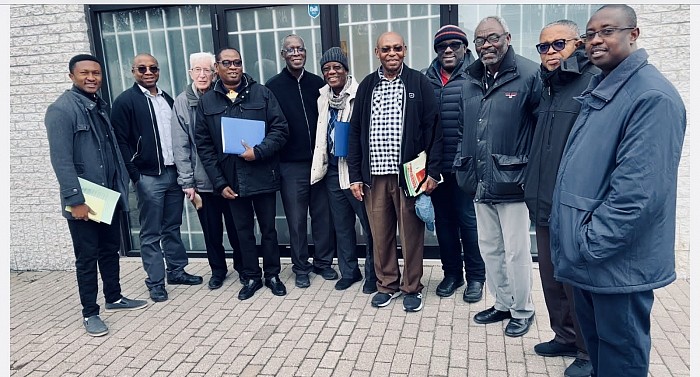
Spiritan confreres Left to Right…
Darlington Oparaike (Nigeria), Arinze Onwuzulike (Nigeria), Joe Kelly (Ireland), Anthony Dankor (Ghana), Alex Osei (Ghana- Provincial Bursar), Oliver Iwuchukwu (Nigeria - Provincial Superior), Jude Ogbenna (Nigeria), Dexter Brereton (Trinidad), Gabriel Ezewudo (Nigeria), Edward Okorie (Nigeria), Percy Acquah (Ghana).
Some of these confreres have been in Canada before and have returned, some have been here a number of years and some are new to our community of TransCanada.
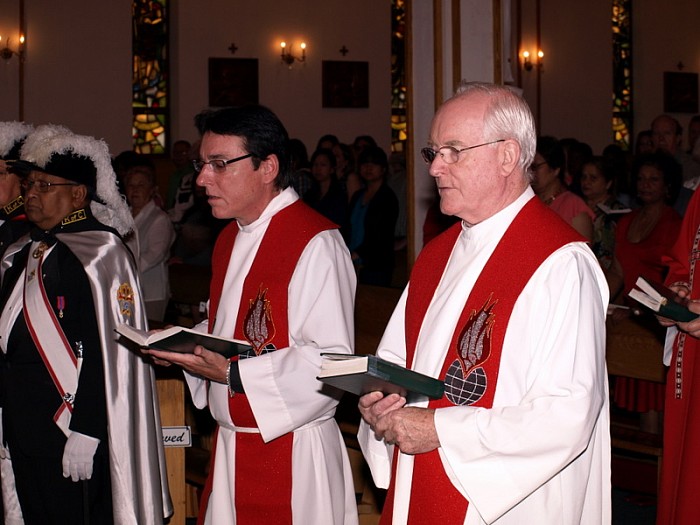
Pastoral
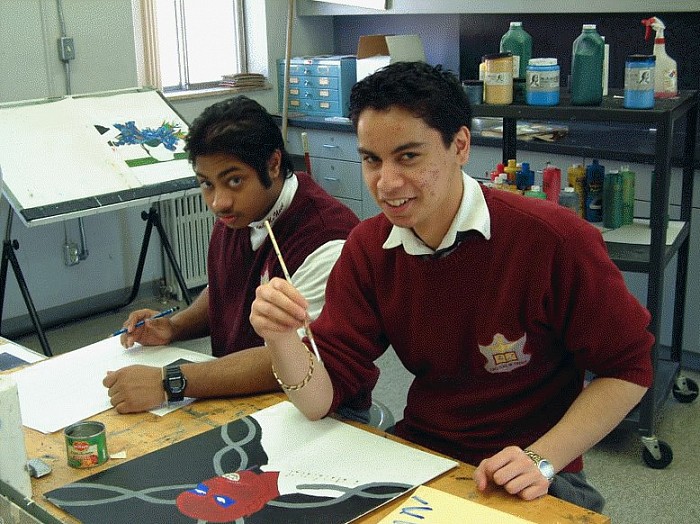
Education
Mission